logo

+1 978 733 0253

contact@univdatos.com

logo
  • Home
  • About
  • Industry
  • Services
  • Reading
  • Contact
  • Home
  • About
  • Industry
  • Services
  • Reading
  • Contact
Earth background

Order your tailored research report now!

UnivDatos

Since 2013, UnivDatos has been a trusted provider of market intelligence and procurement management services, supporting organizations with data-driven insights and strategic solutions.

QUICK LINKS

  • Home
  • About
  • Services
  • Contact
  • Privacy Policy
  • Terms & Conditions
  • Legal
  • Disclaimer
  • Cancellation Policy

INDUSTRY VERTICALS

  • Automotive
  • Aerospace and Defence
  • Agriculture
  • Building Material and Construction
  • View All

CONTACT

C-80B, Sector 8, Noida, Uttar Pradesh- 201301, India

+1 978 733 0253contact@univdatos.com

© 2025 UnivDatos. All Rights Reserved.

Cooling Fabrics Market: Current Analysis and Forecast (2024-2032)

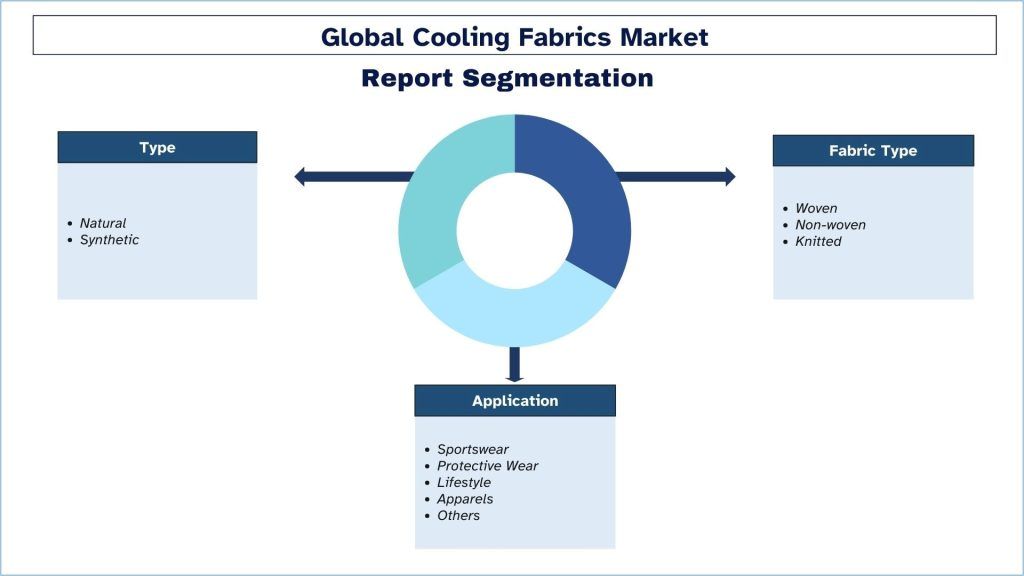
Emphasis on Type (Natural and Synthetic); Fabric Type (Woven, Non-Woven, and Knitted); Application (Sportswear, Protective Wear, Lifestyle, Apparels, and Others); and Region/Country
Geography:

Global

Industry:

Chemical

Last updated:

Nov 2024

Home

Report Store

Chemical

  • Report Description
  • Table of content
  • Research Methodology
  • FAQs

License Options

$3,999

$3,599(-10%)

$5,499

$4,399(-20%)

$6,999

$4,899(-30%)

Cooling Fabrics Market Size & Forecast


Global Cooling Fabrics Market Size & Forecast


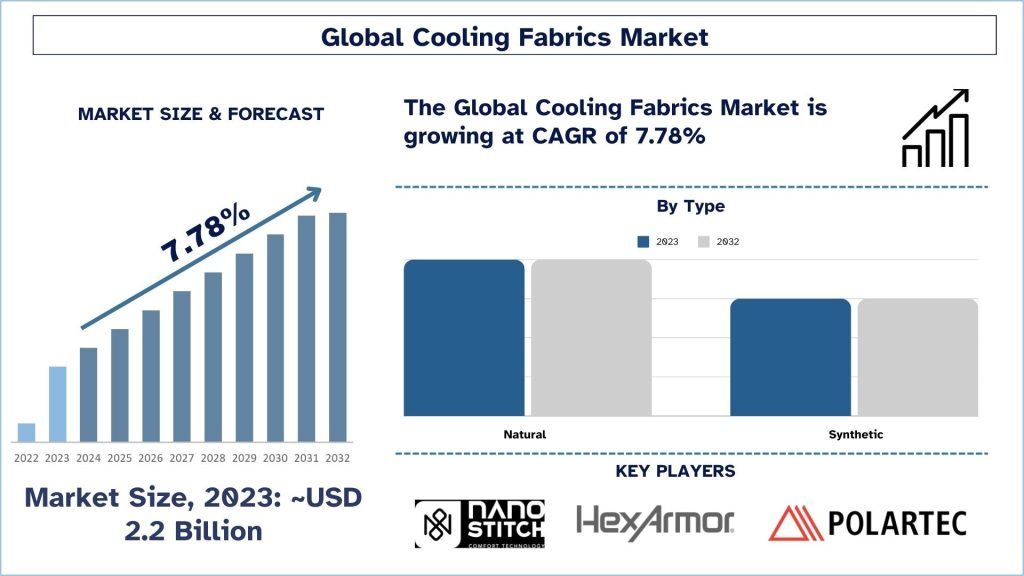
The Global Cooling Fabrics Market was valued at USD 2.2 billion in 2023 and is expected to grow at a strong CAGR of around 7.78% during the forecast period (2024-2032) owing to the rise of e-commerce has increased consumer access to a wider variety of cooling fabric products, particularly in regions where these fabrics were previously unavailable in local stores.


Cooling Fabrics Market Analysis


The Cooling Fabrics market is the worldwide industry covering the production of fabrics developed to balance body temperature due to sweating, breathability, and heat-eliminating capabilities that can help make garments more comfortable to wear. These fabrics are popular in sportswear, outdoor wear, and active wear, but have wider uses in health products, automobiles, and industrial products. Drivers are the growth in sports and fashion-related activities, improvement in fabric manufacturing and weaving technology, improvements in management techniques, favorable demographic trends, Envirotech, value addition, and globalization. Also, the trends of health and wellness, as well as the phenomenon of athleisure, combine to push the market forward.


Global Cooling Fabric Market Trends


This section discusses the key market trends that are influencing the various segments of the global Cooling Fabrics market, as found by our team of research experts.


Woven Segment Transforming Industry


The woven category contributes greatly to the cooling fabrics market globally and provides durability and moisture management crucial for athletic and outdoor wear. Some of the best materials using woven build include shirts, trousers suits, and sports jackets because the fabric surfaces have better air circulation and are capable of wicking off moisture compared to many knitted fabrics. This makes them fit athletes and other active people who need outfits that do not make them uncomfortable when participating in exercises. Furthermore, developments in the weaving processes have enabled the integration of various fibers and treatments in the development of these materials, which improve their cooling characteristics. Since there is a rapidly growing trend towards the use of functional and aesthetic sportswear cooling woven fabrics have become popular and hence propelling the market forward.

Cooling Fabrics Market Segmentation


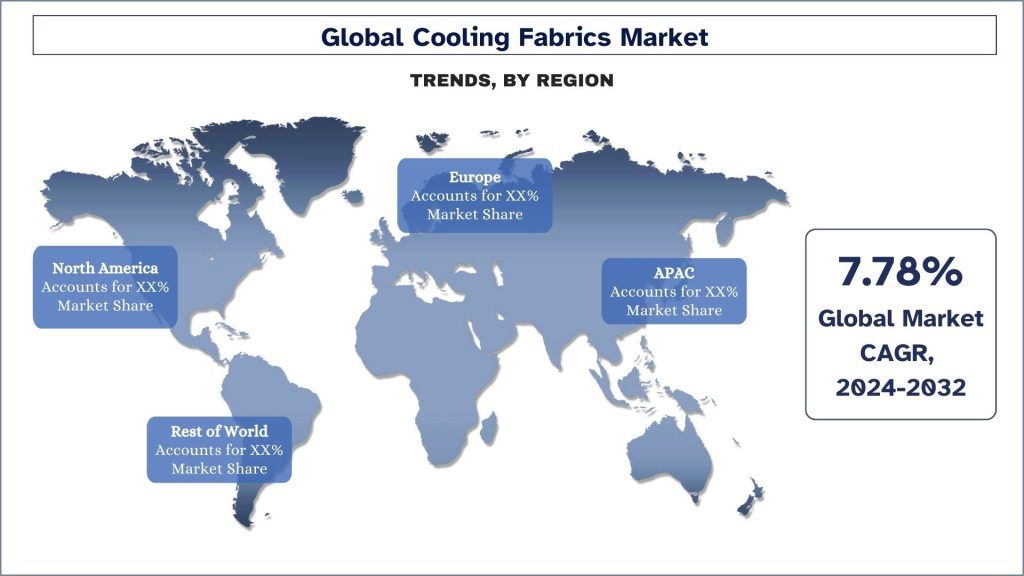
North America is expected to grow at a significant rate during the forecast period.


The cooling fabrics market in North America is also on the rise mainly due to the demand for better fabrics in different sectors such as sportswear, outdoor wear, and home textiles. This growth is driven by trends in health consciousness where consumers buy clothes and wearables, especially for warmer climates requiring better fabric that supports bodily comfort during physical activities. Large brands in sportswear and outdoor companies are sourcing stylish clothing made from better cooling technologies and environmentally conscious production materials for their massive customers who are now conscious of style, comfort, and environmental impacts. Further, with the rapid growth in the textile industry, growth in textile technology and commitment to R&D are yet to aid the market fundamentally. There is also the favorable background of a well-developed network of retail outlets, and the constant development of the athleisure segment, all of which – assist in the growth of the cooling fabrics market in North America.

Cooling Fabrics Market Trends


Global Cooling Fabrics Industry Overview


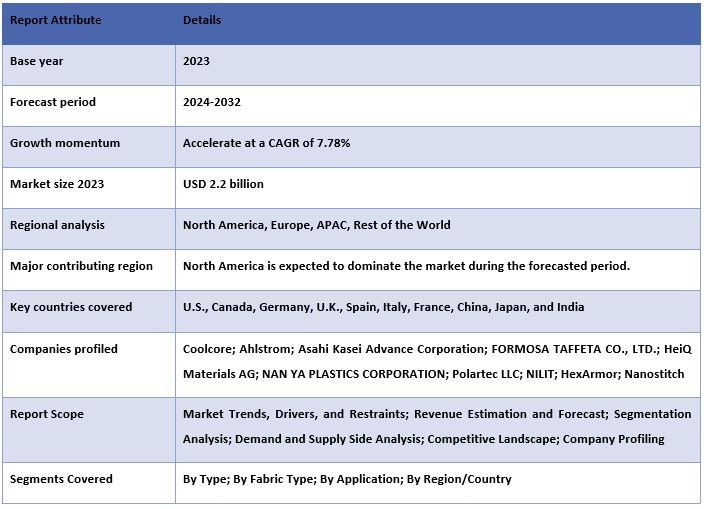
The global cooling fabrics market is competitive, with several global and international market players. The key players are adopting different growth strategies to enhance their market presence, such as partnerships, agreements, collaborations, new product launches, geographical expansions, and mergers and acquisitions. Some of the major players in the market are Coolcore; Ahlstrom; Asahi Kasei Advance Corporation; FORMOSA TAFFETA CO., LTD.; HeiQ Materials AG; NAN YA PLASTICS CORPORATION; Polartec LLC; NILIT; HexArmor; Nanostitch

Global Cooling Fabrics Market Report Coverage


Cooling Fabrics Market Report Coverage


Reasons to buy this report:


  • The study includes market sizing and forecasting analysis confirmed by authenticated key industry experts.

  • The report briefly reviews overall industry performance at one glance.

  • The report covers an in-depth analysis of prominent industry peers, primarily focusing on key business financials, type portfolios, expansion strategies, and recent developments.

  • Detailed examination of drivers, restraints, key trends, and opportunities prevailing in the industry.

  • The study comprehensively covers the market across different segments.

  • Deep dive regional level analysis of the industry.


Customization Options:


The global cooling fabrics market can further be customized as per the requirement or any other market segment. Besides this, UMI understands that you may have your own business needs, hence feel free to contact us to get a report that completely suits your requirements.


Table of Contents

  1. 1. Market Introduction

    1. Market Definitions
    2. Main Objective
    3. Stakeholders
    4. Limitation
  2. 2. Research Methodology Or Assumption

    1. Research Process of the Global Cooling Fabrics Market
    2. Research Methodology of the Global Cooling Fabrics Market
    3. Respondent Profile
  3. 3. Executive Summary

    1. Industry Synopsis
    2. Segmental Outlook
      1. Market Growth Intensity
    3. Regional Outlook
  4. 4. Market Dynamics

    1. Drivers
    2. Opportunity
    3. Restraints
    4. Trends
    5. PESTEL Analysis
    6. Demand Side Analysis
    7. Supply Side Analysis
      1. Merger & Acquisition
      2. Investment Scenario
      3. Industry Insights: Leading Startups and Their Unique Strategies
  5. 5. Pricing Analysis

    1. Regional Pricing Analysis
    2. Price Influencing Factors
  6. 6. Global Cooling Fabrics Market Revenue (USD Bn), 2022-2032f

    1. GLOBAL COOLING FABRICS MARKET REVENUE (USD BN), 2022-2032F
  7. 7. Market Insights By Type

    1. Natural
    2. Synthetic
  8. 8. Market Insights By Fabric Type

    1. Woven
    2. Non-woven
    3. Knitted
  9. 9. Market Insights By Application

    1. Sportswear
    2. Protective Wear
    3. Lifestyle
    4. Apparels
    5. Others
  10. 10. Market Insights By Region

    1. North America
      1. U.S.
      2. Canada
      3. Rest of North America
    2. Europe
      1. Germany
      2. U.K.
      3. France
      4. Italy
      5. Spain
      6. Rest of Europe
    3. Asia-Pacific
      1. China
      2. Japan
      3. India
      4. Rest of Asia-Pacific
    4. Rest of World
  11. 11. Value Chain Analysis

    1. Marginal Analysis
    2. List of Market Participants
  12. 12. Competitive Landscape

    1. Competition Dashboard
    2. Competitor Market Positioning Analysis
    3. Porter Five Forces Analysis
  13. 13. Company Profiled

    1. Coolcore
      1. Company Overview
      2. Key Financials
      3. SWOT Analysis
      4. Product Portfolio
      5. Recent Developments
    2. Ahlstrom
    3. Asahi Kasei Advance Corporation
    4. FORMOSA TAFFETA CO., LTD.
    5. HeiQ Materials AG
    6. NAN YA PLASTICS CORPORATION
    7. Polartec LLC
    8. NILIT
    9. HexArmor
    10. Nanostitch
  14. 14. Acronyms & Assumption

    1. ACRONYMS & ASSUMPTION
  15. 15. Annexure

    1. ANNEXURE

Research Methodology for the Global Cooling Fabrics Market Analysis (2024-2032)


Analyzing the historical market, estimating the current market, and forecasting the future market of the global Cooling Fabrics market were the three major steps undertaken to create and analyze the adoption of global Cooling Fabrics in major regions. Exhaustive secondary research was conducted to collect the historical market figures and estimate the current market size. Secondly, to confirm these insights, numerous findings and assumptions were considered. Moreover, exhaustive primary interviews were conducted with industry experts across the value chain of the global Cooling Fabrics market. For the assumption and validation of market numbers through primary interviews, we employed a top-down/bottom-up approach to forecasting the complete market size. Thereafter, market breakdown and data triangulation methods were adopted to estimate and analyze the market size of segments and sub-segments of the industry. The detailed method is explained below:


Analysis of Historical Market Size


Step 1: In-Depth Study of Secondary Sources:


A detailed secondary study was conducted to obtain the historical market size of the global Cooling Fabrics market through company internal sources such as annual reports & financial statements, performance presentations, press releases, etc., and external sources including journals, news & articles, government publications, competitor publications, sector reports, third-party database, and other credible publications.


Step 2: Market Segmentation:


After obtaining the historical market size of the global Cooling Fabrics market, we conducted a detailed secondary analysis to gather historical market insights and share for different segments & sub-segments for major regions. Major segments are included in the report, such as type, fabric type, application, and region. Further country-level analysis were conducted to evaluate the overall adoption of testing models in that region.


Step 3: Factor Analysis:


After buying the historical market size of different segments and sub-segments, we conducted a detailed factor analysis to estimate the current market size of the global Cooling Fabrics market. Further, we conducted factor analysis using dependent and independent variables such as type, fabric type, application, and global Cooling Fabrics market regions. A thorough analysis of demand and supply-side scenarios was conducted considering top partnerships, mergers and acquisitions, business expansion, and product launches in the global Cooling Fabrics market.


Current Market Size Estimate & Forecast


Current Market Sizing: Based on actionable insights from the above 3 steps, we arrived at the current market size, key players in the global Cooling Fabrics market, and market shares of the segments. All the required percentage shares split and market breakdowns were decided using the above-mentioned secondary approach and were verified through primary interviews.


Estimation & Forecasting: For market estimation and forecast, weights were assigned to several factors including drivers & trends, restraints, and opportunities available for the stakeholders. After analyzing these factors, relevant forecasting techniques, i.e., the top-down/bottom-up approach were applied to arrive at the market forecast for 2032 for different segments and sub-segments across the major markets globally. The research method adopted to estimate the market size encompasses:


  • The industry’s market size, in terms of revenue (USD) and the adoption rate of the global Cooling Fabrics market across the major markets domestically

  • All percentage shares, splits, and breakdowns of market segments and sub-segments

  • Key players in the global Cooling Fabrics market in terms of types offered. Also, the growth strategies adopted by these players to compete in the fast-growing market.


Market Size and Share Validation


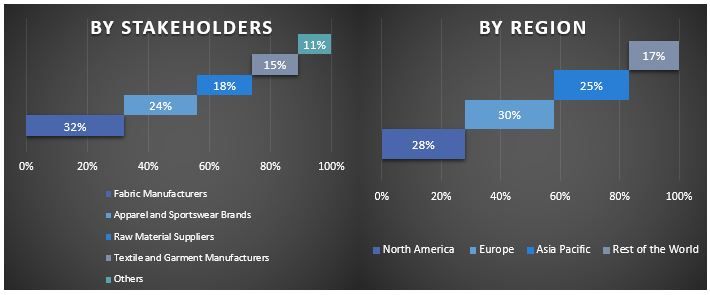
Primary Research: In-depth interviews were conducted with the Key Opinion Leaders (KOLs) including Top Level Executives (CXO/VPs, Sales Head, Marketing Head, Operational Head, Regional Head, Country Head, etc.) across major regions. Primary research findings were then summarized, and statistical analysis was performed to prove the stated hypothesis. Inputs from primary research were combined with secondary findings, hence turning information into actionable insights.
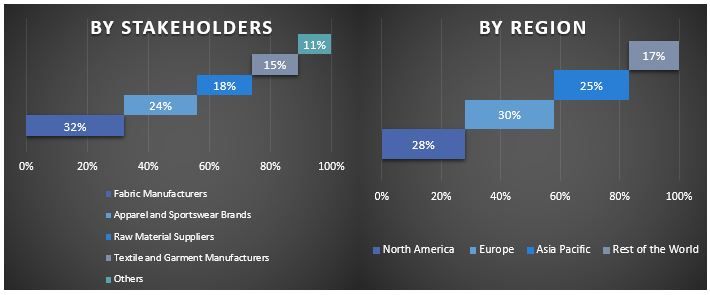

Split of Primary Participants in Different Regions


Cooling Fabrics Market Graph


Market Engineering


The data triangulation technique was employed to complete the overall market estimation and to arrive at precise statistical numbers for each segment and sub-segment of the global Cooling Fabrics market. Data was split into several segments and sub-segments after studying various parameters and trends in the global Cooling Fabrics market’s type, fabric type, application, and regions.


The Main Objective of the Global Cooling Fabrics Market Study


The current & future market trends of the global Cooling Fabrics market were pinpointed in the study. Investors can gain strategic insights to base their discretion for investments on the qualitative and quantitative analysis performed in the study. Current and future market trends determined the market’s overall attractiveness at a regional level, providing a platform for the industrial participant to exploit the untapped market to receive help from a first-mover advantage. Other quantitative goals of the studies include:


  • Analyze the current forecast and market size of the global Cooling Fabrics market in terms of value (USD). Also, analyze the current forecast and market size of different segments and sub-segments.

  • Segments in the study include areas of type, fabric type, application, and regions.

  • Define and analyze the regulatory framework for the industry.

  • Analyze the value chain involved with the presence of various intermediaries, along with analyzing customer and competitor behaviors of the industry.

  • Analyze the current and forecast market size of the global Cooling Fabrics market for the major regions.

  • Major countries of regions studied in the report include Asia Pacific, Europe, North America, and the Rest of the World

  • Company profiles of the global Cooling Fabrics market and the growth strategies the players adopt to sustain the fast-growing market.

  • Deep dive regional level analysis of the industry


You can also purchase parts of this report. Do you want to check out a section wise
price list?


Get in touch with team


Frequently Asked Questions FAQs

Q1: What is the global Cooling Fabrics market’s current market size and growth potential?

The global Cooling Fabrics market was valued at USD 2.2 billion in 2023 and is expected to grow at a CAGR of 7.78% during the forecast period (2024-2032).

Q2: What are the driving factors for the growth of the global cooling fabrics market?

The increasing awareness of fitness and health is driving demand for sportswear that incorporates cooling fabrics. These fabrics enhance comfort by managing moisture and temperature, appealing to both athletes and casual consumers.

Q3: Which segment has the largest global cooling fabrics market share by type category?

The natural category has the largest share of the global cooling fabrics market by type segment.

Q4: What are the emerging technologies and trends in the global Cooling Fabrics market?

Q5: Which regions dominate the global Cooling Fabrics market?

North America is expected to dominate the market during the forecast period.

Related Reports

Customers who bought this item also bought

Polybutylene Adipate Terephthalate Market: Current Analysis and Forecast (2024-2032)

Polybutylene Adipate Terephthalate Market: Current Analysis and Forecast (2024-2032)

Emphasis on Application (Composite Bags, Cling Films, Bin Bags, Medical Clothing); By End-Use (Packaging, Agriculture, Fishery, Consumer Goods, Coatings); Region/Country

September 20, 2024

Phase Change Material Market: Current Analysis and Forecast (2024-2032)

Phase Change Material Market: Current Analysis and Forecast (2024-2032)

Emphasis on Type (Organic, Inorganic, and Eutectics); Application (Building and Construction, HVAC, Electronics, Thermal Energy Storage, Others); and Region/Country

July 23, 2024

Brine Concentration Technology Market: Current Analysis and Forecast (2024-2032)

Brine Concentration Technology Market: Current Analysis and Forecast (2024-2032)

Emphasis on Technology (High-Energy Reverse Osmosis (HERO), Vertical Tube Falling Film); Type (Calcium Chloride and Sodium Chloride); and Region/Country

July 12, 2024

Hydrogenation Catalyst Market: Current Analysis and Forecast (2024-2032)

Hydrogenation Catalyst Market: Current Analysis and Forecast (2024-2032)

Emphasis on Type (Precious Metal Based, Common Metal Based, Alloy Based); Form (Heterogenous Catalyst, Homogeneous Catalyst); Application (Food, Petrochemicals, Oil & Gas, Pharmaceuticals, Chemical, and Others); and Region/Country

July 12, 2024

Fireproof Ceramics Market: Current Analysis and Forecast (2024-2032)

Fireproof Ceramics Market: Current Analysis and Forecast (2024-2032)

Emphasis on Type (Blanket, Module, Bulk, Board, Paper, and Others); End-Use (Iron & Steel, Petrochemicals, Ceramics & Glass, Aluminum, Power Generation, and Others); and Region/Country

November 8, 2024

Nitrogen Trifluoride & Fluorine Gas Market: Current Analysis and Forecast (2024-2032)

Nitrogen Trifluoride & Fluorine Gas Market: Current Analysis and Forecast (2024-2032)

Emphasis on Type (Nitrogen Trifluoride and Fluorine Gas); Application (Electronics and Chemicals); and Region/Country

November 7, 2024

Cooling Fabrics Market: Current Analysis and Forecast (2024-2032)

Cooling Fabrics Market: Current Analysis and Forecast (2024-2032)

Emphasis on Type (Natural and Synthetic); Fabric Type (Woven, Non-Woven, and Knitted); Application (Sportswear, Protective Wear, Lifestyle, Apparels, and Others); and Region/Country

November 4, 2024

Mesoporous Silica Market: Current Analysis and Forecast (2024-2032)

Mesoporous Silica Market: Current Analysis and Forecast (2024-2032)

Emphasis on Product Type (MCM Series, SBA Series, and Others); Application (Catalysis, Drug Delivery, Environmental Protection, and Others); and Region/Country

October 7, 2024

1,3-PROPANEDIOL (PDO) Market: Current Analysis and Forecast (2024-2032)

1,3-PROPANEDIOL (PDO) Market: Current Analysis and Forecast (2024-2032)

Emphasis on Product (Conventional, and Bio-based); By Application (Polytrimethylene Terephthalate (PTT), Cosmetics, Personal Care and Cleaning Products, Polyurethane, Others); Region/Country

September 27, 2024

Biobased Leather Market: Current Analysis and Forecast (2024-2032)

Biobased Leather Market: Current Analysis and Forecast (2024-2032)

Emphasis on Source (Cork, Corn, Leftover Fruits, Pineapple, Cactus, Tree Barks, Others); By Application (Footwear, Garments & Accessories, Others); Region/Country

September 23, 2024

Polybutylene Adipate Terephthalate Market: Current Analysis and Forecast (2024-2032)

Polybutylene Adipate Terephthalate Market: Current Analysis and Forecast (2024-2032)

Emphasis on Application (Composite Bags, Cling Films, Bin Bags, Medical Clothing); By End-Use (Packaging, Agriculture, Fishery, Consumer Goods, Coatings); Region/Country

September 20, 2024

Phase Change Material Market: Current Analysis and Forecast (2024-2032)

Phase Change Material Market: Current Analysis and Forecast (2024-2032)

Emphasis on Type (Organic, Inorganic, and Eutectics); Application (Building and Construction, HVAC, Electronics, Thermal Energy Storage, Others); and Region/Country

July 23, 2024

Brine Concentration Technology Market: Current Analysis and Forecast (2024-2032)

Brine Concentration Technology Market: Current Analysis and Forecast (2024-2032)

Emphasis on Technology (High-Energy Reverse Osmosis (HERO), Vertical Tube Falling Film); Type (Calcium Chloride and Sodium Chloride); and Region/Country

July 12, 2024

Hydrogenation Catalyst Market: Current Analysis and Forecast (2024-2032)

Hydrogenation Catalyst Market: Current Analysis and Forecast (2024-2032)

Emphasis on Type (Precious Metal Based, Common Metal Based, Alloy Based); Form (Heterogenous Catalyst, Homogeneous Catalyst); Application (Food, Petrochemicals, Oil & Gas, Pharmaceuticals, Chemical, and Others); and Region/Country

July 12, 2024

Fireproof Ceramics Market: Current Analysis and Forecast (2024-2032)

Fireproof Ceramics Market: Current Analysis and Forecast (2024-2032)

Emphasis on Type (Blanket, Module, Bulk, Board, Paper, and Others); End-Use (Iron & Steel, Petrochemicals, Ceramics & Glass, Aluminum, Power Generation, and Others); and Region/Country

November 8, 2024

Nitrogen Trifluoride & Fluorine Gas Market: Current Analysis and Forecast (2024-2032)

Nitrogen Trifluoride & Fluorine Gas Market: Current Analysis and Forecast (2024-2032)

Emphasis on Type (Nitrogen Trifluoride and Fluorine Gas); Application (Electronics and Chemicals); and Region/Country

November 7, 2024

Cooling Fabrics Market: Current Analysis and Forecast (2024-2032)

Cooling Fabrics Market: Current Analysis and Forecast (2024-2032)

Emphasis on Type (Natural and Synthetic); Fabric Type (Woven, Non-Woven, and Knitted); Application (Sportswear, Protective Wear, Lifestyle, Apparels, and Others); and Region/Country

November 4, 2024

Mesoporous Silica Market: Current Analysis and Forecast (2024-2032)

Mesoporous Silica Market: Current Analysis and Forecast (2024-2032)

Emphasis on Product Type (MCM Series, SBA Series, and Others); Application (Catalysis, Drug Delivery, Environmental Protection, and Others); and Region/Country

October 7, 2024

1,3-PROPANEDIOL (PDO) Market: Current Analysis and Forecast (2024-2032)

1,3-PROPANEDIOL (PDO) Market: Current Analysis and Forecast (2024-2032)

Emphasis on Product (Conventional, and Bio-based); By Application (Polytrimethylene Terephthalate (PTT), Cosmetics, Personal Care and Cleaning Products, Polyurethane, Others); Region/Country

September 27, 2024

Biobased Leather Market: Current Analysis and Forecast (2024-2032)

Biobased Leather Market: Current Analysis and Forecast (2024-2032)

Emphasis on Source (Cork, Corn, Leftover Fruits, Pineapple, Cactus, Tree Barks, Others); By Application (Footwear, Garments & Accessories, Others); Region/Country

September 23, 2024

Polybutylene Adipate Terephthalate Market: Current Analysis and Forecast (2024-2032)

Polybutylene Adipate Terephthalate Market: Current Analysis and Forecast (2024-2032)

Emphasis on Application (Composite Bags, Cling Films, Bin Bags, Medical Clothing); By End-Use (Packaging, Agriculture, Fishery, Consumer Goods, Coatings); Region/Country

September 20, 2024

Phase Change Material Market: Current Analysis and Forecast (2024-2032)

Phase Change Material Market: Current Analysis and Forecast (2024-2032)

Emphasis on Type (Organic, Inorganic, and Eutectics); Application (Building and Construction, HVAC, Electronics, Thermal Energy Storage, Others); and Region/Country

July 23, 2024

Brine Concentration Technology Market: Current Analysis and Forecast (2024-2032)

Brine Concentration Technology Market: Current Analysis and Forecast (2024-2032)

Emphasis on Technology (High-Energy Reverse Osmosis (HERO), Vertical Tube Falling Film); Type (Calcium Chloride and Sodium Chloride); and Region/Country

July 12, 2024

Hydrogenation Catalyst Market: Current Analysis and Forecast (2024-2032)

Hydrogenation Catalyst Market: Current Analysis and Forecast (2024-2032)

Emphasis on Type (Precious Metal Based, Common Metal Based, Alloy Based); Form (Heterogenous Catalyst, Homogeneous Catalyst); Application (Food, Petrochemicals, Oil & Gas, Pharmaceuticals, Chemical, and Others); and Region/Country

July 12, 2024